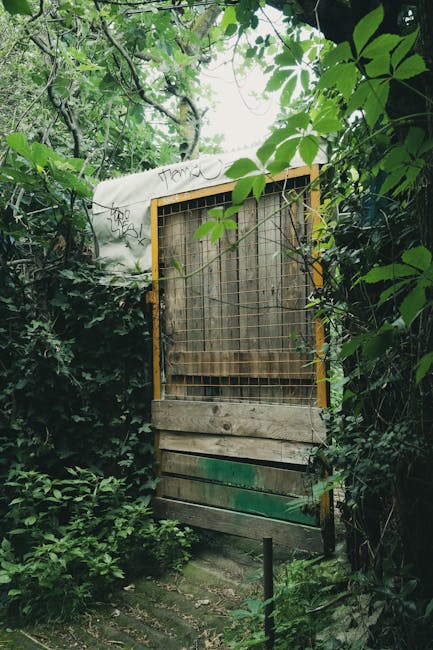
What to know about access problems for South Norwood gardeners
Access sounds like a small detail until a mower won't fit through the side gate, a pile of topsoil has nowhere to go, or the only route to the back garden is a narrow path past bikes, bins, and a very determined flower bed. Then it becomes the whole job. If you are trying to understand what to know about access problems for South Norwood gardeners, the short version is this: good gardening work is often less about the plants and more about the route to the plants.
South Norwood gardens can be lovely and varied, but they can also be awkward. Terraced layouts, tight side passages, shared entrances, stepped gardens, narrow gates, and older boundary features can all slow things down. That does not mean the work cannot be done. It just means it needs a smarter plan, the right equipment, and a bit of local realism. In this guide, we will look at the practical issues, what they change on site, and how to deal with them without turning the whole day into a minor puzzle.
Contents
- Why access problems matter for South Norwood gardens
- How access challenges affect garden work
- Key benefits of planning access properly
- Who this is for and when it makes sense
- Step-by-step guidance for dealing with access issues
- Expert tips for smoother garden access
- Common mistakes to avoid
- Tools, resources and recommendations
- Law, compliance, standards and best practice
- Options and comparison table
- Real-world example
- Practical checklist
- Conclusion
- Frequently asked questions
Why access problems matter for South Norwood gardens
Access shapes almost every part of garden work. If it is poor, even simple jobs can take longer, cost more, and create more disruption than expected. A lawn cut that should take an hour can stretch because the mower has to be carried through the house. A hedge trim becomes a tidy-up mission before the real work begins. And if you are bringing in materials for landscaping work in South Norwood, access issues can affect delivery, storage, and removal of waste all at once.
For homeowners, renters, landlords, and property managers, the issue is not just convenience. Poor access can affect safety, the finish of the work, and whether a project is even practical on the day. Let's face it, nobody wants a lovely new garden plan to stall because there is no clear route for a wheelbarrow. It happens more often than people think.
Access also matters for protecting the property itself. Gardeners may need to carry tools past indoor flooring, narrow hallways, side returns, or fencing panels. If the route is cramped or cluttered, you increase the chance of scuffs, spills, and awkward lifting. So yes, access is a practical issue. But it is also a cost-control issue, a time issue, and a stress issue. All three, really.
In South Norwood, access concerns often show up in everyday ways:
- gates that are too narrow for larger equipment
- broken or uneven paving along the only entry route
- locked side passages or shared access with neighbours
- gardens split by steps or changes in level
- heavy pruning, soil, or paving materials that need careful moving
- limited space to store waste, compost, or tools during the visit
Once you understand the access picture, the rest of the job becomes much easier to plan. That is the real point here.
How access challenges affect garden work
When gardeners assess a job, they are not only looking at what needs doing. They are also looking at how they will get in, where they will work, and how they will get everything out again. In practical terms, access affects labour, equipment choice, sequence of tasks, and sometimes even the methods used.
Take a simple example. A small lawn in a back garden might seem straightforward, but if the route is through a narrow hallway and down three steps, using a lightweight mower or hand tools may be more sensible than carrying a bulkier machine. Similarly, for heavier jobs such as waste removal or hedge reduction, access can determine whether the work is done in one visit or broken into several smaller stages.
There is also the question of setup space. Some jobs need a flat area for staging materials, sharpening tools, mixing compost, or laying out cuttings. If the garden has almost no room to move, the gardener may need to adapt the workflow. That can still produce a good result, but only if the plan is realistic from the start.
In South Norwood, access problems often come in combinations rather than alone. A side gate may be narrow, the path may be muddy, and the only storage space may be beside the kitchen door. One small issue becomes three. That is why experienced gardeners tend to ask awkward-sounding questions before they arrive. They are not being fussy. They are trying to save time, avoid damage, and keep the job moving.
A good access assessment usually covers:
- gate width and height clearance
- steps, slopes, or uneven ground
- doorway and corridor space if access is via the house
- surface condition, including slippery paving or loose gravel
- power, water, and storage points
- parking and unloading space nearby
This is where a service such as gardening services in South Norwood can be particularly useful, because the work can be planned around the site rather than forced into a one-size-fits-all approach.
Key benefits of planning access properly
Good access planning sounds dull. It is not glamorous. But it pays back quickly. In our experience, the best garden jobs often look effortless because the access problem was handled early. That is the secret sauce, really.
1. Faster work with fewer interruptions
When the route is clear, tools and materials can move without constant stopping, lifting, or detouring. That means more time spent on actual gardening, and less on logistics.
2. Lower risk of damage
Careful access planning helps protect paving, fences, walls, lawns, and indoor floors. It also reduces the chance of dropping heavy items in tight spaces.
3. Better results on larger jobs
For tasks such as hedge reductions, tree work, or landscaping, the quality of the finish can suffer if crews are always working around bottlenecks. The cleaner the route, the cleaner the result. Simple as that.
4. Clearer pricing and fewer surprises
When access is explained up front, estimates are more accurate. That does not mean every awkward garden costs more, but it does mean the work can be priced on reality rather than guesswork.
5. Safer working conditions
Trip hazards, tight corners, heavy lifting, and awkward carrying routes all increase risk. Reducing those risks is good for everyone on site, including the client.
6. Less neighbour friction
If access depends on shared paths, temporary parking, or moving items through communal areas, the project runs more smoothly when neighbours are informed in advance. A calm message at the right time prevents a lot of side-eye later.
Access planning also supports other garden improvements. For example, if your garden needs regular upkeep, a structured plan with garden maintenance in South Norwood can be tailored around the easiest route in and out, which is a very underrated advantage.
Who this is for and when it makes sense
Access problems are not only for big projects. They affect all sorts of garden owners and properties. If your outdoor space is easy to forget until something breaks, trims wildly, or starts leaning into the neighbour's fence, this matters to you.
Homeowners with compact or awkward layouts
Terraced homes, maisonettes, and older properties often have narrow side returns, tight gate openings, or split-level back gardens. Even routine work can become awkward if the access route is not suited to the tools needed.
Landlords and letting agents
Turnaround work between tenancies often needs speed and predictability. If access is tricky, you want the issue identified before the appointment, not on the day the tenant is moving furniture out. That is one of those moments nobody enjoys.
Busy households
If the only route to the garden goes through a kitchen, hallway, or shared side passage, then planning is essential. Otherwise the work may clash with family routines, pets, or school-run chaos.
People commissioning larger upgrades
For jobs involving decking, fencing, patios, or redesign work, access influences material delivery and installation order. This is where it helps to think about the whole garden journey, not just the finished look. If you are considering a bigger transformation, landscaping services often start with a site check for exactly this reason.
Anyone dealing with overgrown boundaries or hard-to-reach corners
When hedges, trees, ivy, or rough growth make a garden feel tighter than it really is, access can become both a cause and a consequence of the problem. A route gets blocked, tools get harder to use, and the space starts to feel even smaller. A bit of calm planning helps break that cycle.
So when does it make sense to act? Usually before the work begins, not after the first problem appears. That sounds obvious, but people still skip it. We all do. Then the gate does not open enough, or the bin store blocks the wheelbarrow, and everyone has a small sigh at once.
Step-by-step guidance for dealing with access issues
If you want to make a South Norwood garden easier to maintain, start with the route, not the roses. Here is a practical way to approach it.
- Walk the whole route from the street to the work area. Notice gates, locks, steps, tight turns, overhead obstacles, and anything that may snag a tool or trolley.
- Measure the awkward points. Gate width, step depth, head height, and turning space matter more than people expect. A small measuring tape can save a lot of muddle later.
- Identify the heaviest items. Think about soil bags, timber, paving slabs, waste sacks, water containers, and equipment. What needs to move, and how far?
- Decide what should be brought through the property. Some jobs are fine with smaller hand tools. Others need special handling or a different sequence.
- Clear the route before work day. Move bikes, plant pots, bins, toys, hose reels, and loose furniture. It sounds trivial, but this one step often makes the biggest difference.
- Check where waste will be staged. If cuttings, rubble, or old materials will build up, make sure there is a temporary holding space that does not block movement.
- Speak up about shared access. If a neighbour's path, driveway, or alley is involved, plan that in advance. Quiet coordination beats apologising with a wheelbarrow in hand.
- Choose the right service approach. Some tasks are best handled as one tidy visit; others work better in phases. For regular mowing, for instance, choosing the right lawn mowing option in South Norwood can keep access simple and the schedule predictable.
- Review the result and adjust. If the same access issue keeps coming back, look for a long-term fix: wider gates, clearer storage, better surfacing, or a new garden layout.
That last point is often where the real value lies. A one-off workaround is fine. But if a garden is hard to use every single month, a structural solution may be worth more than a dozen temporary fixes.
Expert tips for better results
There are a few habits that make access problems much easier to manage, and they are rarely dramatic. Mostly they are about noticing things early and not pretending a narrow route is somehow fine when it plainly is not.
Keep the "working line" open. That is the path a gardener will use most often: gate, staging spot, waste route, tool route. If one line stays open, the whole day feels less cluttered.
Use lighter, modular equipment where possible. In tight gardens, smaller tools and sectional kit are often more effective than big machinery. You may lose a little speed but gain a lot of control.
Trim access blockers before they become access blockers. Overgrown hedges, low branches, climbing ivy, and self-seeded growth can turn a passable route into a squeeze. If the issue is boundary growth, hedge trimming can help reopen the route without making the garden look stripped bare.
Think about where mud and mess will go. Wet weather is a classic South London nuisance. A clean route in the morning can turn slippery by lunchtime. If you know a section gets muddy, protect it before the job starts rather than after someone has already skidded through it. Not ideal, that.
Use materials to improve access, not just appearance. Replacing loose gravel, repairing broken steps, or simplifying a cramped corner can make routine garden care much easier. This is why some access problems are best handled as part of a wider upgrade rather than as a one-off repair.
Ask for a site-specific plan. A proper plan should describe how tools will enter, where waste will exit, and what happens if access changes during the work. That kind of thinking is especially useful when heavy items or garden structures are involved, such as with decking services or other installation work.
Leave room for the unexpected. Sometimes a lock sticks, a neighbour is away, or a path is wetter than expected. Good gardeners adapt. Good clients do too. A little flexibility saves a lot of fuss.
Common mistakes to avoid
Most access problems get worse because someone assumes they will sort themselves out. They rarely do. Here are the mistakes we see most often.
- Not mentioning the access issue early. If a gate is narrow or a route is shared, say so before the visit is booked.
- Overlooking indoor routes. If the garden is accessed through the house, the inside route matters just as much as the outside one.
- Leaving clutter in place. Bikes, toys, compost bins, garden furniture, and hose reels can create the exact blockage you are trying to avoid.
- Forgetting about waste. A job may be easy to start but awkward to finish if there is nowhere to stack cuttings or bagged waste.
- Choosing the wrong equipment size. Bigger is not always better. In a tight garden, smaller and more manageable is often the winning choice.
- Ignoring boundary overgrowth. Ivy, hedges, and tree growth can slowly steal access if nobody trims them back. If that sounds familiar, a visit from tree surgery specialists may be the safest way to restore clearance.
- Assuming access will be the same all year. Winter mud, summer growth, and wet leaves all change how a route feels underfoot.
One small thing people forget: access is not just for the gardener. It is for you, too. If a garden is awkward to enter, water, clean, or maintain, it will probably be awkward to enjoy as well. That is the bit that tends to sting a little.
Tools, resources and recommendations
You do not need a shed full of specialist kit to improve access, but a few tools and habits make a real difference.
- Measuring tape: for gate widths, step heights, and turning space
- Wheelbarrow or garden trolley: useful when the route is flat enough to support it
- Protective sheets or mats: helpful for indoor routes and neat work zones
- Pruning tools: for clearing low growth or overhanging branches
- Clear storage boxes: good for keeping tools off the path and out of the way
- Lighting: important for darker side passages or early starts
There are also a few useful ways to think about the garden itself. If the layout regularly causes bottlenecks, the answer may not be more forceful access but a simpler design. For example, container gardening can reduce the need to move bulky planting materials through tight spaces. Likewise, if you are after a low-maintenance route to cleaner outdoor surfaces, patio cleaning in South Norwood can remove slippery buildup that makes access harder than it should be.
If your garden is full of fast spreaders, climbing growth, or exposed corners, it can help to combine access planning with plant management. That means tackling the things that physically block movement while also shaping the space so that routine visits are easier. A garden should not feel like a obstacle course. Nobody wants that at 8am with secateurs.
Law, compliance, standards and best practice
For most domestic gardens, access issues are handled as practical site planning rather than as a formal legal process. Still, there are a few standards of behaviour and care that matter.
Property access and consent
If a gardener needs to use a side passage, driveway, shared path, or any other area that is not clearly part of the private work zone, it should be agreed in advance. That is common sense, but also good practice. Shared spaces should be treated carefully and respectfully.
Neighbour awareness
If work may affect a neighbouring property, especially through noise, temporary obstruction, or shared entry, a short heads-up can prevent conflict. That is not a legal lecture; it is just decent planning.
Safety and manual handling
Heavy lifting, awkward carrying, and repeated trips through tight access points should be managed carefully. UK best practice in this area is straightforward: reduce avoidable risk, use suitable equipment, and do not force people to carry more than the route safely allows.
Waste handling
Garden waste should be stored and moved in a way that avoids trip hazards, blocked exits, and mess. If the site is difficult, the work plan should reflect that from the beginning.
Boundary and tree issues
Where overgrowth, unstable branches, or damaged boundaries are affecting access, the work may need to be handled conservatively. In plain English: do not hack at a problem just because it is in the way. Better to assess it properly and use the right approach, especially with tree-related access issues.
For larger or more complex jobs, it is sensible to use a provider that can adapt the plan on site rather than forcing the job into a rigid format. That is particularly true when access is part of a broader outdoor improvement project, such as fencing or boundary work.
Options and comparison table
There is no single fix for access problems. The right solution depends on what is blocking the route, how often the garden needs work, and how much change you want to make.
| Approach | Best for | Pros | Limits |
|---|---|---|---|
| Manual carry-in with small tools | Light maintenance and compact gardens | Flexible, low disruption, quick to organise | Can be slower for large jobs |
| Phased delivery and removal | Projects with bulky materials | Makes narrow access more manageable | May extend the timeline |
| Access clearing and pruning | Overgrown gates, paths, and boundaries | Improves movement right away | Needs upkeep to stay effective |
| Layout changes | Repeated access problems | Long-term improvement and easier maintenance | May require more planning and budget |
| Specialist site plan | Complex or multi-stage jobs | Reduces risk and surprises | Relies on accurate site information |
If you are unsure which route is best, start with the least disruptive option that still solves the problem properly. A tidy access plan is often better than a bigger, flashier fix. Not always, but often.
Real-world example
Imagine a South Norwood townhouse with a small back garden. The only access is through the kitchen and a narrow side door. The gate is fine for a person, but not ideal for a full-size mower. The borders are overgrown, the old paving is a bit slippery, and there is nowhere obvious to pile waste during the visit.
On paper, the job looks simple: mow the lawn, cut back some hedge growth, clear weeds, and tidy the borders. In reality, the access route adds half the challenge. A good plan would probably look something like this:
- clear the indoor route before arrival
- use smaller hand tools and a lightweight mower
- trim back the hedge to widen the passage
- protect the kitchen floor and doorway edges
- bag waste in stages rather than piling it all at once
- review whether the garden layout should be changed later for easier upkeep
The result is a smoother visit, less mess, and no one gets stuck muttering at a gate hinge. That kind of job is not glamorous, but it is exactly the kind of detail that keeps a garden manageable over time.
For gardens that need a broader refresh after years of awkward access and uneven upkeep, a well-planned tidy-up often pairs nicely with lawn care in South Norwood and structured seasonal maintenance. Small fixes done consistently usually beat one giant rescue operation.
Practical checklist
Use this checklist before the next garden visit or project.
- Have I identified every entry route to the garden?
- Are gate widths, steps, and turns measured or at least checked visually?
- Is the route clear of bikes, bins, toys, and loose furniture?
- Do I need to tell anyone about shared access or neighbour involvement?
- Will tools or materials need protection while moving through the house?
- Is there a good place to stage waste, cuttings, or new materials?
- Are hedges, branches, or ivy narrowing the access route?
- Would smaller tools or phased delivery make the job easier?
- Do wet or dark conditions make the route more difficult at certain times?
- Would a long-term layout change be better than repeated workarounds?
If you can tick most of those off, you are in good shape. If not, that is fine too. You now know where the friction is, and that is half the battle.
Conclusion
Access problems are one of those garden issues that stay invisible until they become impossible to ignore. Once you notice them, though, you start seeing them everywhere: the gate that barely opens, the route that turns muddy, the hedge that steals a few more inches each month, the delivery that has nowhere to land. The good news is that most access problems can be managed, and many can be improved for good with a little planning.
For South Norwood gardens, the best approach is usually practical, local, and honest. Measure the route. Clear the clutter. Trim the blockers. Choose the right tools. And if the layout needs more than a quick fix, think about a wider change that makes the garden easier to live with, not just easier to look at. That is where the real value is.
Get a free quote today and see how much you can save.
And if you do make one improvement this season, let it be the one that makes everything else easier. A garden that welcomes you in is a much nicer place to work in, and to enjoy on a quiet afternoon with a mug of tea and a bit of sun on your face.
Frequently Asked Questions
What are the most common access problems for South Norwood gardens?
The most common issues are narrow gates, cramped side passages, steps, uneven paving, shared access, and blocked routes caused by bikes, bins, furniture, or overgrowth.
Why does access matter so much for garden maintenance?
Because access affects how quickly work can be done, what tools can be used, how safely materials can be moved, and whether the garden can be left tidy without damage.
Can gardeners still work if my gate is too narrow for a mower?
Usually yes. A gardener may use smaller tools, manual methods, or a different workflow. If the garden is tight, the job may just need a more flexible plan.
Should I mention access issues before booking garden work?
Absolutely. Early notice helps with planning, pricing, equipment choice, and timing. It is one of the simplest ways to avoid surprises on the day.
Do access problems make garden work more expensive?
Sometimes they can, especially if they add time, extra labour, or special handling. But not every awkward garden is more expensive. Clear planning often keeps costs under control.
What should I clear before the gardener arrives?
Move bikes, toys, bins, plant pots, hose reels, and anything else that blocks the route. If the access is through the house, clear indoor floors and doorways as well.
How can I make a narrow garden easier to maintain long term?
Consider simpler planting, clearer routes, better storage, tidier edges, and, where appropriate, layout changes that reduce repeated bottlenecks.
What if access depends on a neighbour's shared path or driveway?
That should be agreed in advance. Shared access is manageable, but it works best when everyone knows what is happening and when.
Can overgrown hedges or ivy affect access?
Yes. Overgrowth often steals usable width and makes it harder to carry tools or waste through the garden. Trimming or removal may be needed before routine work becomes easy again.
Is access planning important for landscaping projects too?
Very much so. Larger projects often need delivery routes, storage areas, and waste removal plans. If access is tight, the whole project may need to be staged differently.
What is the best first step if my garden feels impossible to access?
Walk the route from street to garden and look for the exact bottleneck. Once you know where the problem is, the fix usually becomes much clearer.
Do access issues affect lawn care and hedge trimming differently?
Yes. Lawn care often needs repeated movement and regular entry, while hedge trimming can be more about reaching the boundary safely and removing cuttings without blocking the route.
Is it worth changing the garden layout just because access is awkward?
If the same problem keeps coming back, yes, it can be worth it. A small layout change may save time and effort every single season.